
Public Record
Electoral Journey (1978–2014)
A legacy of 3 Assembly victories and 3 Lok Sabha victories reflecting sustained voter confidence across Hatia and Ranchi, marking a broadening of influence from grassroots representation to national policymaking.
Democratic Mandate
Six Electoral Victories (1978–2014)
Documented legislative record: Three-term MLA for Hatia and three-term Member of Parliament (Lok Sabha) for Ranchi.
First MLA Election — Hatia, Ranchi
Began his electoral career from Hatia, Ranchi, establishing a strong grassroots base and emerging as a prominent regional voice in the Bihar Legislative Assembly.
Re-elected MLA — Hatia, Ranchi
Strengthened constituency connect and took on pivotal legislative responsibilities, including Public Accounts and Committee of Privileges, enhancing scrutiny of government functioning.
Third Consecutive MLA Term — Hatia, Ranchi
Consolidated regional leadership and consistently raised local development and Jharkhand-related concerns in the Assembly before transitioning to national politics.
First Lok Sabha Election — Ranchi (9th Lok Sabha)
Entered Parliament as an ardent advocate of Jharkhand's regional aspirations, carrying local demands for statehood and political representation to the national stage.
Re-elected to Lok Sabha — Ranchi (14th Lok Sabha)
Returned to national Parliament with a decisive mandate. Appointed Minister of State (Independent Charge) for Food Processing Industries, pioneering the Mega Food Parks Scheme and cold-chain infrastructure.
Third Lok Sabha Victory — Ranchi (15th Lok Sabha)
Secured another mandate from Ranchi. Continued stewardship of Food Processing before being elevated to Union Cabinet Minister for Tourism (2011), driving tourist circuits and hospitality skill development.
Institutional Oversight
Legislative Committee Leadership (1978–1989)
Strengthening legislative scrutiny, expenditure transparency, citizen petition mechanisms, and parliamentary research infrastructure.
Public Accounts Committee (PAC)
President for 4 Years (Bihar Assembly)
Led stringent legislative scrutiny of public expenditure and government financial accountability, ensuring public funds were utilized transparently and responsibly.
Committee of Privileges
President for 2 Years (Bihar Assembly)
Reinforced the authority, privileges, and institutional dignity of the legislature, fostering an accountable institutional culture within the Assembly.
Committee on Petitions
President for 3 Years (Bihar Assembly)
Provided a formal, responsive institutional channel through which citizens' grievances and grassroots representations reached legislative resolution.
Library Committee
Leadership for 4 Years (Bihar Assembly)
Upgraded the Assembly's research facilities and informational infrastructure, supporting rigorous, informed parliamentary debate and decision-making.
Institutionalising the Jharkhand Question (1989–1990)
Rather than leaving the demand for a separate Jharkhand as purely a regional street agitation, Shri Subodh Kant Sahay utilized his ministerial position at the Centre to bring it into formal constitutional and administrative deliberation.
Chaired the Committee on Jharkhand Matters meeting on 25 April 1990 as Union Minister of State for Home Affairs.
Reconvened and finalized the committee report on 14 May 1990 for submission to Union Home Minister Mufti Mohammad Sayeed.
The process examined institutional alternatives including full statehood, Union Territory status, and a Jharkhand General Council within Bihar.
Linked regional tribal and Moolvasi development demands with formal national decision-making, laying the institutional groundwork that culminated in statehood in 2000.
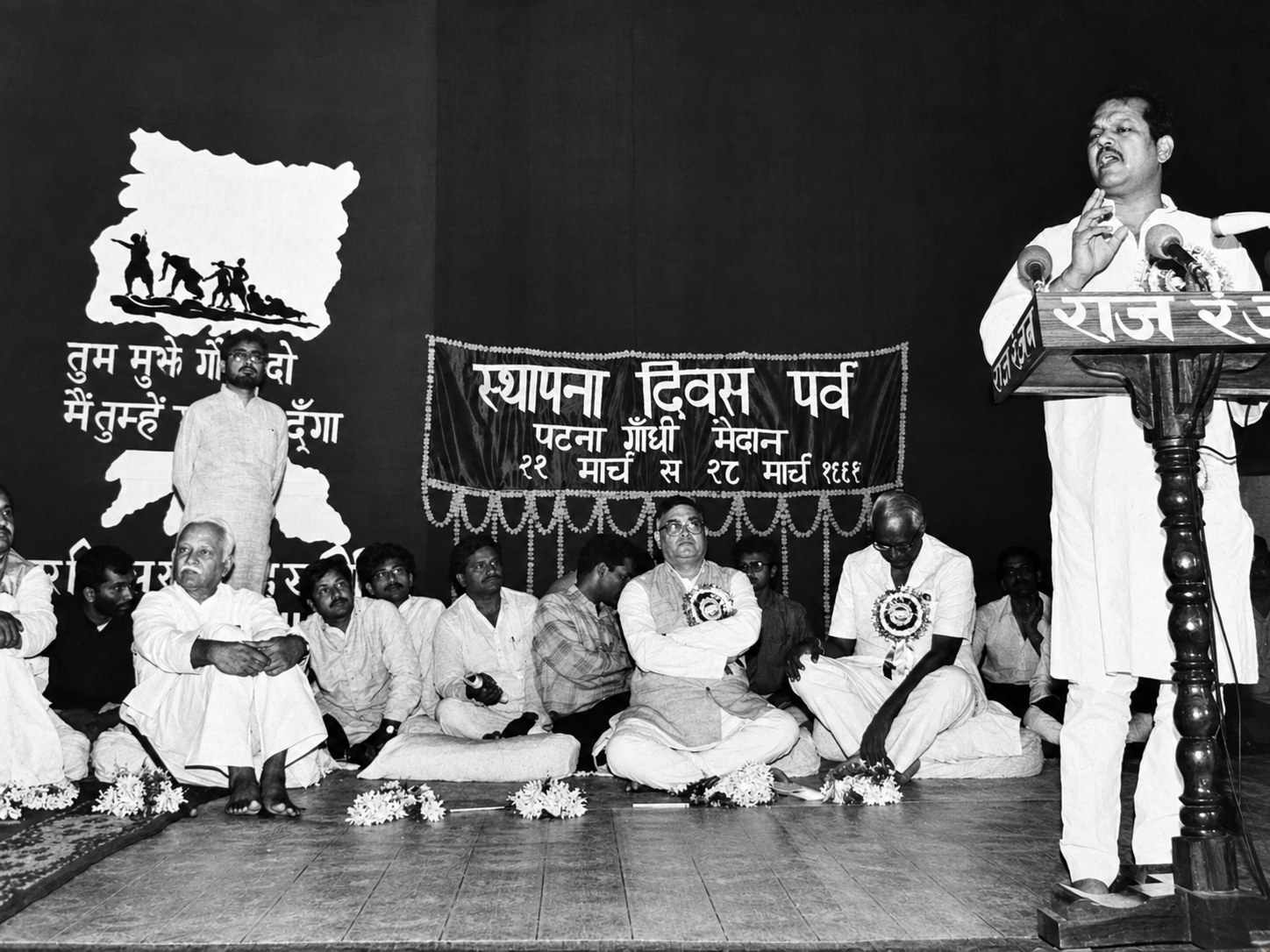
Union Governance (1990–1991)
Union Minister of State for Home Affairs & I&B
Leading internal security administration, parliamentary accountability, and public broadcasting reforms during a volatile national era.
Internal Security & Migrant Relief
- •Reported to Parliament in August 1990 on 60,092 registered displaced Kashmiri migrant families in Jammu and Delhi camps, linking security policy with humanitarian relief.
- •Maintained strict legislative oversight in Punjab, balancing law enforcement firmness with constitutional accountability.
- •Actively facilitated inter-community dialogue and consensus-building mechanisms during the sensitive Ayodhya dispute period.
Information & Broadcasting Leadership
- •Steered the landmark Prasar Bharati Act (1990) through Parliament, establishing institutional autonomy for public broadcasting (Doordarshan and All India Radio).
- •Articulated the constitutional necessity for non-partisan public media serving all Indian citizens rather than partisan government interests.